
10 Common Dog Training Mistakes
(and How to Fix Them)

Training your dog can be an exciting journey, but it’s also easy to fall into certain traps. Many dog owners unknowingly make dog training mistakes that slow progress, confuse their pets, or even cause unwanted behaviors. Whether you’re a first-time puppy parent or a seasoned dog owner in Canada, knowing the common dog training mistakes and how to fix them can save you frustration and help your dog thrive.
In this guide, we’ll cover the top 10 dog training mistakes, why they happen, and practical solutions to get back on track.
1. Inconsistency in Commands and Rules
One of the most frequent dog training mistakes is inconsistency. Dogs thrive on routine and clear signals. If you allow jumping on the couch sometimes but scold it other times, your dog will be confused. Similarly, if you use different words for the same command, like “sit” and “sit down,” your dog may struggle to respond reliably.
According to a study comparing e-collar and positive reinforcement training, dogs trained with clear, consistent commands and rewards learned faster and showed fewer behavioral problems.

How to Fix It
Establish clear household rules and make sure everyone uses identical commands. Create a simple chart listing approved commands, hand signals, and corresponding behaviors.
“Sit” should always mean the same thing, delivered the same way, by every family member. Consistency applies to timing too—if jumping on guests is forbidden, it must be forbidden every single time, not just when you’re in the mood to enforce it.
Practice consistent dog training by setting up scenarios deliberately. Have family meetings to discuss training goals and methods. Tell them which dog training mistakes should be avoided. When everyone commits to the same approach, your dog will learn exponentially faster.
2. Using Punishment Instead of Positive Reinforcement
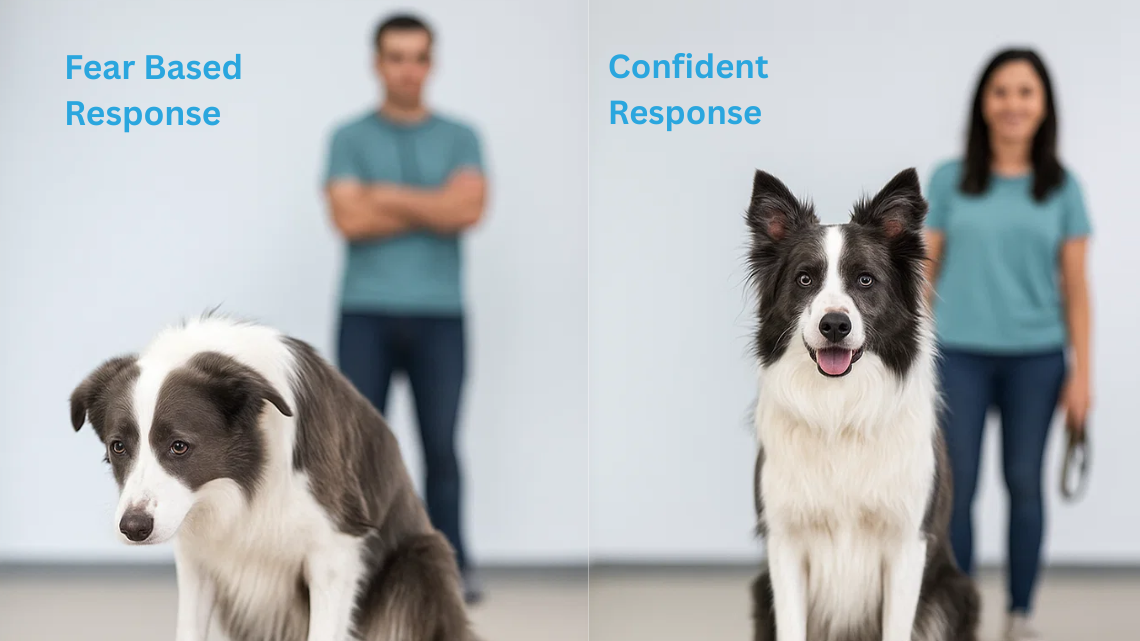
Many dog training mistakes stem from outdated correction-based methods. Yelling, hitting, or using harsh corrections might stop a behavior momentarily, but they damage your relationship and create fear-based compliance rather than genuine understanding. And this is also a key reason why beginner dog training mistakes happen.
Research shows that dogs trained with aversive methods show higher stress and fear responses compared to those trained with reward-based methods. A study published on PubMed found that positive reinforcement not only improves learning but also strengthens the dog–owner bond.
How to Fix It
Switch to positive dog training techniques. Reward good behavior instead of punishing bad behavior. Switch to positive dog training methods that reward desired behaviors rather than punishing unwanted ones.
When your dog sits politely instead of jumping, mark that moment with a “yes!” and provide a treat. When they chew their toy instead of your shoes, praise them enthusiastically.
This doesn’t mean ignoring bad behavior—it means redirecting it. If your puppy nips during play, immediately stop interacting and turn away. The loss of attention teaches them that biting ends the fun. Then, when they play gently, reward that alternative behavior. Positive dog training builds confidence and creates dogs who want to cooperate rather than dogs who comply out of fear.
Recommended Reading: Toys Your Pooch Will Love! – Doggy Deets
3. Expecting Too Much Too Soon
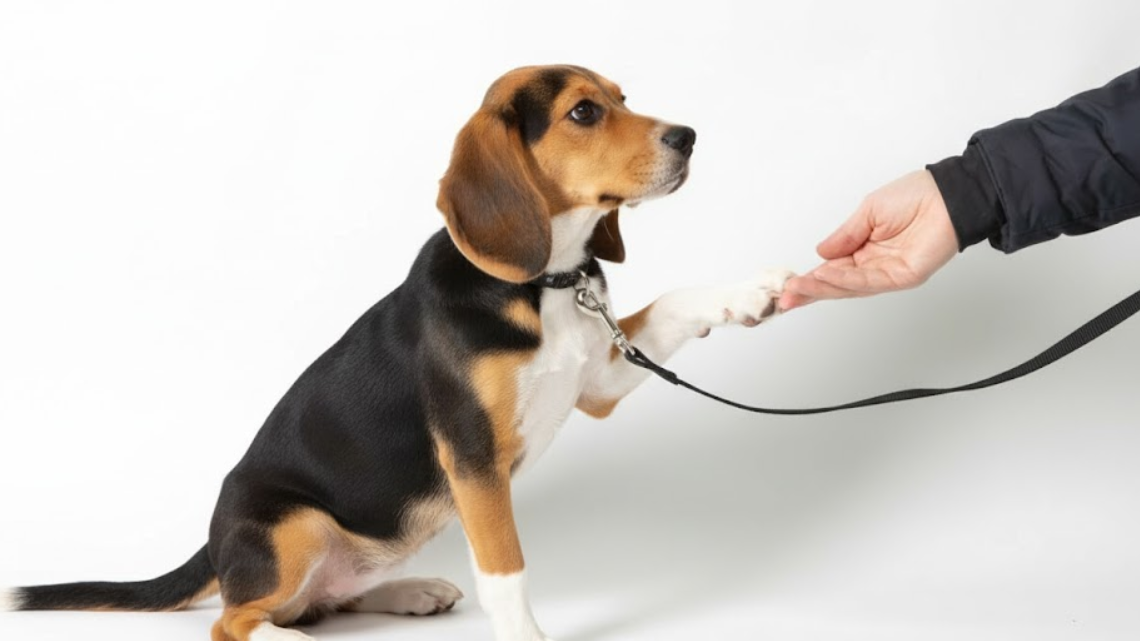
Dogs learn at different rates, and expecting immediate results is among the common dog training mistakes. Pups, older dogs, and rescues all progress differently. Unrealistic expectations can lead to frustration and inconsistent training. This is particularly common when owners see perfectly behaved dogs at the park and wonder why their dog doesn’t perform the same way, not realizing those dogs have months or years of training behind them.
Age, breed, individual temperament, and previous experiences all affect learning speed. A young border collie might master “sit” in one session, while a senior hound with years of different training might take weeks to reliably respond. Neither is doing anything wrong—they’re simply different learners.
How to Fix It
Accept your individual dog’s learning pace and celebrate small victories. If your leash-pulling dog walks calmly for 10 steps before pulling again, that’s progress worth rewarding. If your reactive dog notices another dog without barking, that’s a major win. Break larger goals into tiny, achievable steps and acknowledge each one.
Remember that “stubborn” dogs often aren’t stubborn at all—they’re confused, insufficiently motivated, or haven’t generalized the behavior to that particular context. Instead of labeling your dog difficult, examine your training approach. Are your rewards valuable enough? Is the environment too distracting? Have you built foundation skills? These questions lead to solutions that actual stubbornness doesn’t.
4. Not Socializing Your Dog Properly
Dog training mistakes often include keeping young dogs too isolated during critical developmental windows. The socialization period (roughly 3-14 weeks of age) is when puppies learn what’s safe and normal in their world. Missing this window or doing too little too late creates dogs who fear novel situations, people, other animals, and new environments.
Fear-based reactivity and aggression frequently stem from inadequate socialization. A dog who rarely encountered children as a puppy may become anxious or defensive around them. A dog who never experienced car rides may develop crippling anxiety about vehicle travel.

How to Fix It
For puppies, prioritize safe, positive exposures to various people, animals, surfaces, sounds, and experiences. Before full vaccination, carry your puppy to different locations so they can observe the world safely. Invite friends over to meet your puppy with treats in hand.
For older dogs with socialization gaps, progress slowly and pair new experiences with high-value rewards. If your adult dog fears strangers, don’t force interactions. Instead, have strangers toss treats from a distance while ignoring your dog. Gradually decrease distance as your dog’s comfort increases. This systematic desensitization helps correct dog behavior problems rooted in fear and insufficient early exposure.
Puppies exposed to diverse people, sounds, and environments early in life are more confident and adaptable. The Purina Canada puppy socialization guide highlights how structured social experiences reduce fear-based behaviors later on.
5. Training Sessions That Are Too Long or Too Infrequent
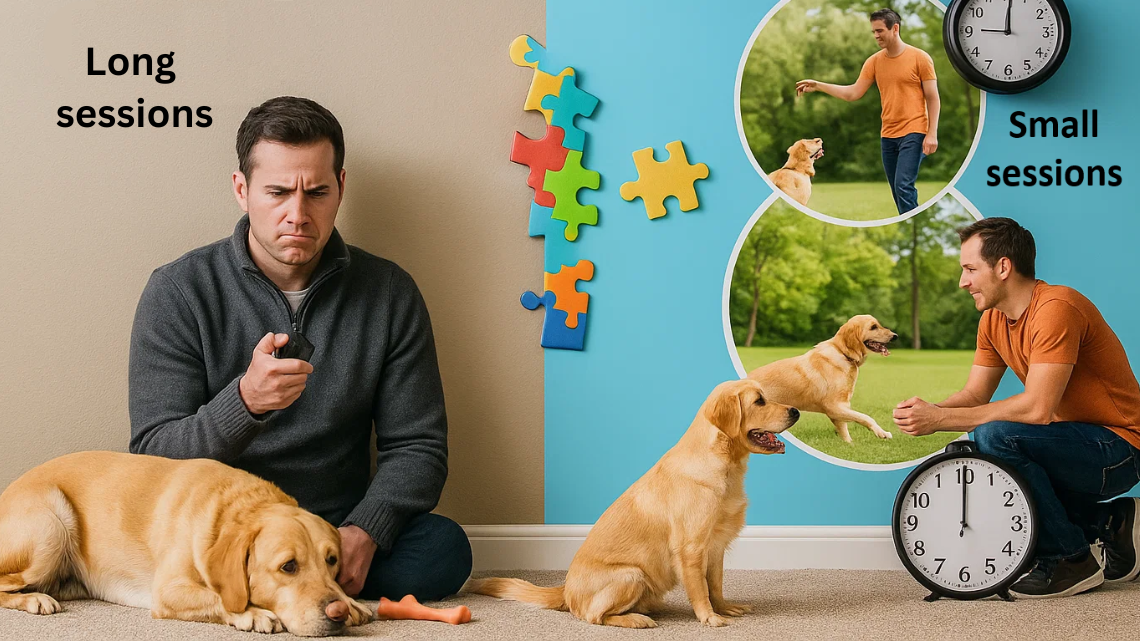
Many dog training mistakes happen because owners overlook how long or how often they train. Some spend 30 minutes in one go, pushing beyond their dog’s attention span. Others only practice once a week when they have time. Both slow progress and make learning harder.
Long sessions cause frustration and mental fatigue, leading your dog to lose focus and forget lessons. Short, regular sessions work far better. They keep training fun, help your dog stay engaged, and make progress stick.
How to Fix It
To avoid common dog training mistakes, aim for several short sessions throughout the day instead of one long one. Three to five sessions of 5–10 minutes each help your dog stay focused and make progress faster. This works for obedience training, house training, or teaching new tricks.
Include training in daily routines—ask for “sit” before meals, practice “stay” while preparing food, or use backyard time for recall. These quick moments strengthen learning more than long, formal sessions. Puppies benefit most from short lessons due to limited focus, but even adult dogs learn better with consistent, brief practice spread throughout the day.
6. Ignoring Body Language and Communication
Most first-time training guides focus on commands but ignore the need to read what your dog is saying through behavior. Dogs communicate primarily through body language. Many common dog training mistakes happen when owners ignore signs of stress, confusion, or excitement. Ignoring these signals and pushing through stress leads to shutdowns, fear responses, or aggressive outbursts that seem to come “out of nowhere”—except they didn’t. The warnings were there.
A dog licking their lips, yawning, turning away, tucking their tail, or showing whale eye (seeing the whites of their eyes) is communicating discomfort. Pushing forward in training when your dog displays these signs damages trust and can create negative associations with training itself.

How to Fix It
Learn to read your dog’s body language fluently. Study stress signals and calming behaviors. During training, watch for signs that your dog is becoming overwhelmed—if you see them, take a break, reduce difficulty, or end the session on a positive note.
Effective communication with dogs is a two-way process. You communicate what you want through commands and rewards, and your dog communicates their emotional state through body language. Respecting their signals builds trust and creates a cooperative partnership rather than a one-sided power dynamic. This awareness helps you adjust training pace to match your dog’s emotional capacity, leading to faster, more reliable progress.
7. Skipping Foundation Skills
One of the most common dog training mistakes is rushing into advanced behaviors before mastering basics. Owners want their dog to walk perfectly off-leash before they’ve solidified leash training tips. They attempt recall in dog parks when their dog barely responds at home. This approach sets up failure and frustration.
How to train your dog successfully requires building blocks. Complex behaviors depend on simpler foundation skills. A dog who hasn’t learned to focus on you in a quiet living room won’t suddenly develop that focus in a distracting outdoor environment. A dog who doesn’t understand “stay” for five seconds won’t magically hold it for five minutes.

How to Fix It
Start with the essential obedience training foundations: sit, down, stay, come, and loose-leash walking. Master each behavior in low-distraction environments before adding difficulty. Use the “three Ds” of dog training—distance, duration, and distraction—but only increase one variable at a time.
If your dog can hold a sit-stay for 30 seconds while you stand beside them, the next step might be extending it to 45 seconds or adding one step of distance. Avoid jumping ahead too quickly—trying to walk 10 feet away for two minutes in a busy park is one of the easiest dog training mistakes to make. Gradual progression builds reliable behaviors that stay strong under pressure and helps you avoid future dog training mistakes that come from rushing the process.
8. Neglecting Mental and Physical Exercise
A tired dog is a trainable dog. One of the most overlooked common dog training mistakes is attempting training with an under-exercised, energetically charged dog. A puppy who’s been crated all morning has too much pent-up energy to focus on obedience training. An adolescent dog who hasn’t had a good run will struggle to settle for stay practice.
Beyond physical exercise, mental stimulation is equally vital. Bored dogs find their own entertainment, which often manifests as destructive behaviors like excessive barking, digging, or chewing. These aren’t training failures—they’re management failures.

How to Fix It
Before training sessions, give your dog appropriate physical exercise for their age and breed. A 20-minute walk or 10 minutes of fetch can burn off excess energy that would otherwise distract from learning. Mental enrichment counts too—puzzle toys, sniff walks, and training itself provides cognitive exercise.
Balance is key. Don’t train immediately after intense exercise when your dog is exhausted. A moderately exercised dog has burned off the frantic energy but still has mental focus available for learning. This is the ideal training window. For high-energy breeds, incorporating training into exercise (like practicing recall during fetch) kills two birds with one stone. Meeting your dog’s exercise needs reduces common behavior problems and makes all training more effective.
9. Not Addressing Problem Behaviors Early
Some owners wait too long to correct behaviors like excessive barking, chewing, or jumping. This makes unwanted habits harder to fix later. What seems cute when your puppy is eight weeks old—like jumping on people or play-biting—becomes problematic when that same dog weighs 60 pounds at a year old. Many people fall into the trap of hoping the behavior will resolve itself. They think “he’ll grow out of it” or “it’s just a phase.” But it is one of the major dog training mistakes. While some puppy behaviors do diminish with age, many become ingrained habits that require dedicated training to change.
Early intervention is far easier than correcting established habits. A puppy who’s learning to jump can be taught to sit for greetings in a few sessions. An adult dog who’s been jumping for years requires much more work to retrain because the behavior has been rewarded thousands of times. This applies to house training a dog as well. Addressing accidents immediately with consistent routines is much easier than correcting a six-month-old puppy who’s never learned proper house training. The same principle holds true for barking, pulling on leash, counter-surfing, and resource guarding.

How to Fix It
Address behaviors immediately using positive dog training. The moment you notice an unwanted pattern—even if it’s only happened twice—start working on it. Identify triggers for problem behaviors and manage the environment. If your dog barks at the window, close the curtains while you teach an alternative behavior. Set up your environment to prevent problem behaviors while you teach better ones, and redirect unwanted behaviors to appropriate alternatives immediately.
Example: If your dog barks at the doorbell, teach a calm “sit” or “place” command and reward quiet behavior. Practice with a friend ringing the doorbell repeatedly at intervals while you work on the alternative behavior. Eventually, your dog learns that doorbell equals go to your spot and sit quietly equals treats and praise. Every time your dog performs a behavior, it becomes stronger through repetition, so early intervention saves enormous time compared to retraining established habits later.
10. Not Reinforcing Training in Real-Life Situations
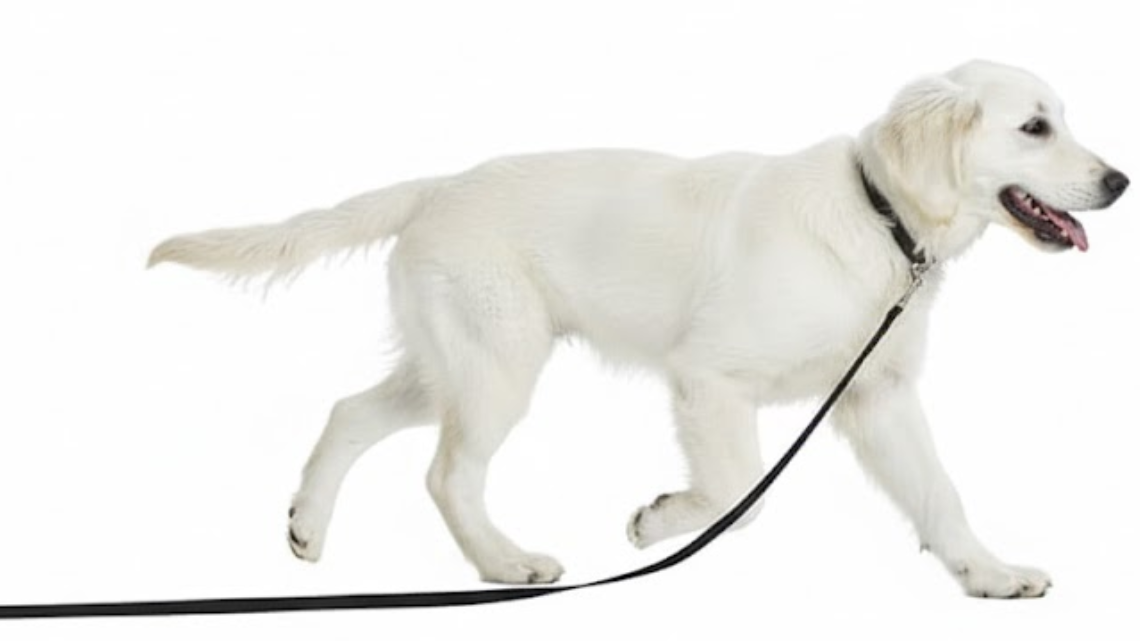
Training only at home or in controlled settings is also among the common dog training mistakes. Dogs need to generalize commands to real-world scenarios, like parks, sidewalks, or outdoor adventures. A dog who performs perfectly in your living room might seem to forget everything they know when taken to a new environment. This isn’t defiance—it’s a failure of generalization. Dogs don’t automatically understand that “sit” in the kitchen means the same thing as “sit” at the park or vet’s office.
If you never practice recall training outside your backyard, you can’t expect reliable recall at the dog park. If your dog only practices “stay” in quiet rooms, they won’t hold it when squirrels run by or other dogs approach. This is why your dog doesn’t listen in certain situations—they simply haven’t learned to perform that behavior in that context yet. Real-world distractions like other dogs, traffic noise, and unfamiliar surfaces compete for your dog’s attention in ways that your living room never does.
How to Fix It
Practice recall training, “sit,” “stay,” “leave it,” and loose-leash walking in different environments. Gradually increase distractions in a systematic way—start in your quiet backyard, then move to a quiet street, then a busier street, then a quiet corner of a park. Use higher-value treats in more distracting places. A good rule of thumb: if your dog can perform a behavior reliably in at least five different environments with varying distraction levels, they’re starting to truly understand that command.
Pro Tip
Adapt Training for Age or Breed
One of the most common dog training mistakes is assuming all dogs learn the same way. Puppies have short attention spans, so three-to-five-minute sessions work best. Adult dogs can focus longer but might need patience to relearn or adjust old habits. Senior dogs can still learn new things, though slower pacing and gentle handling help them stay comfortable.
Recommended Reading: 10 Best Dog Breeds for Families – Doggy Deets
Another frequent dog training mistake is ignoring breed differences. Herding breeds thrive on mental challenges, scent hounds get distracted by smells, terriers respond to variety, and northern breeds prefer purposeful training. Adjusting methods to suit both age and breed leads to faster learning and a happier, more confident dog.
Quick Reference Guide
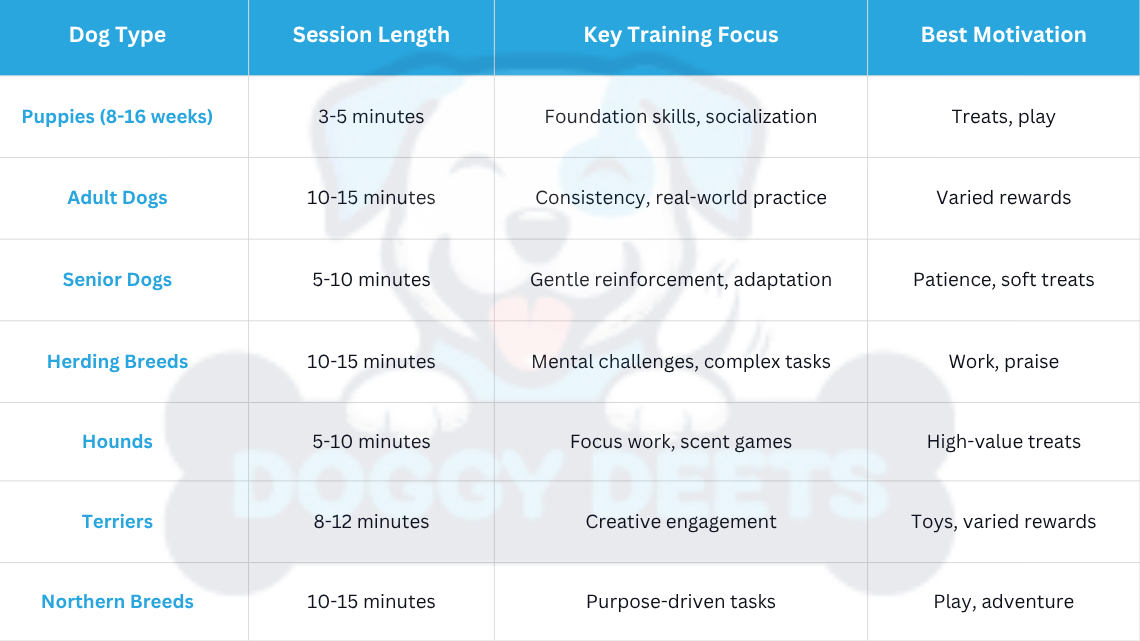
Understanding your dog’s age and breed tendencies helps you adjust training methods for better results. This simple awareness can turn frustrating moments into productive dog training mistakes you learn from, creating steady progress and a stronger bond with your dog.

0 Comments